
What the evidence supports
The Reddit author described a 15kg Australia-bound haul, included item-level fit and flaw notes, and reported using E-EMS for $170 with a six-day arrival. Those are useful facts about this parcel, not a current quote or expected delivery time for another shipment.
Why this review is stronger than a photo dump
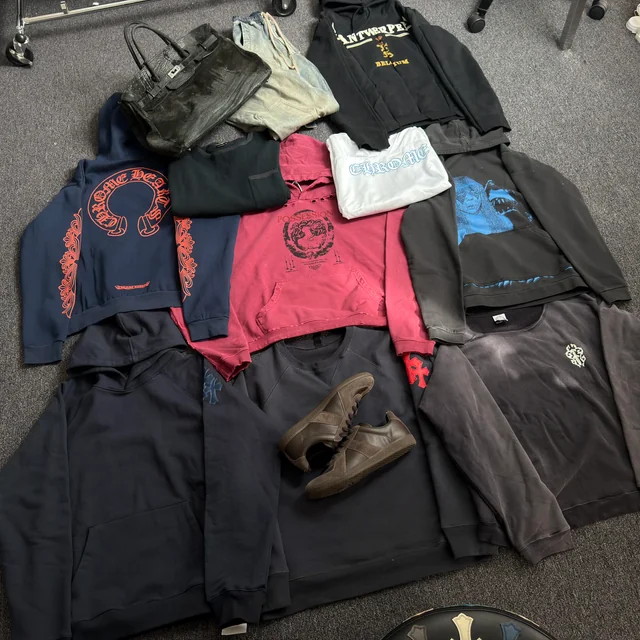
The post, published in r/rep by u/gillyreps, pairs a large gallery with comments about fit and visible flaws. That gives readers something testable: they can identify which details mattered to the owner and use those observations to build their own inspection checklist.
The useful unit is not the overall haul score. It is the item-level note attached to a visible detail. A strong comment such as “the fit ran differently than expected” should lead you to compare measurements; a flaw note should lead you to request the same angle in your own warehouse photos.
How to read the shipping result
The author reported a 15kg parcel sent to Australia with E-EMS for $170 and arriving in six days. Dividing the stated cost by the stated weight gives roughly $11.33 per kilogram, but that arithmetic is descriptive only. It does not reveal dimensional weight, optional services, packaging adjustments or the rate table in effect.
Do not convert this single result into “E-EMS costs $11.33/kg” or “Australia takes six days.” A current estimate must use the measured packed parcel, the routes available at the time and any restrictions that apply. See the shipping guide and estimator for the variables to collect.
What to carry into your own QC check
Use the gallery to decide which views you would want for a similar product: full front and back, labels, construction details, measurements and any area where the poster found a flaw. Then compare those views with the exact ordered colour and size rather than a general product photo.
A community gallery cannot prove that another batch or later listing is identical. Your own received item is the decision point. The QC guide explains how to match the order first and only then inspect category-specific details.
- Match colour, size and version before judging details.
- Translate fit comments into measurement requests.
- Use flaw notes to request targeted close-ups.
- Keep the current listing and your warehouse item separate.
What this case study cannot establish
This one post cannot establish a normal Australia delivery time, a standard per-kilogram price, seller reliability or a customs outcome. It is also a historical post, so linked listings and comments may change after publication.
Its value is narrower and more honest: it shows how one user documented a large haul with enough detail for other readers to ask better questions. Open the original thread for the complete gallery and latest comments, then independently verify every current destination.
What this report used
Sources are provided for context and independent checking. Community statements remain self-reported unless the article says otherwise.